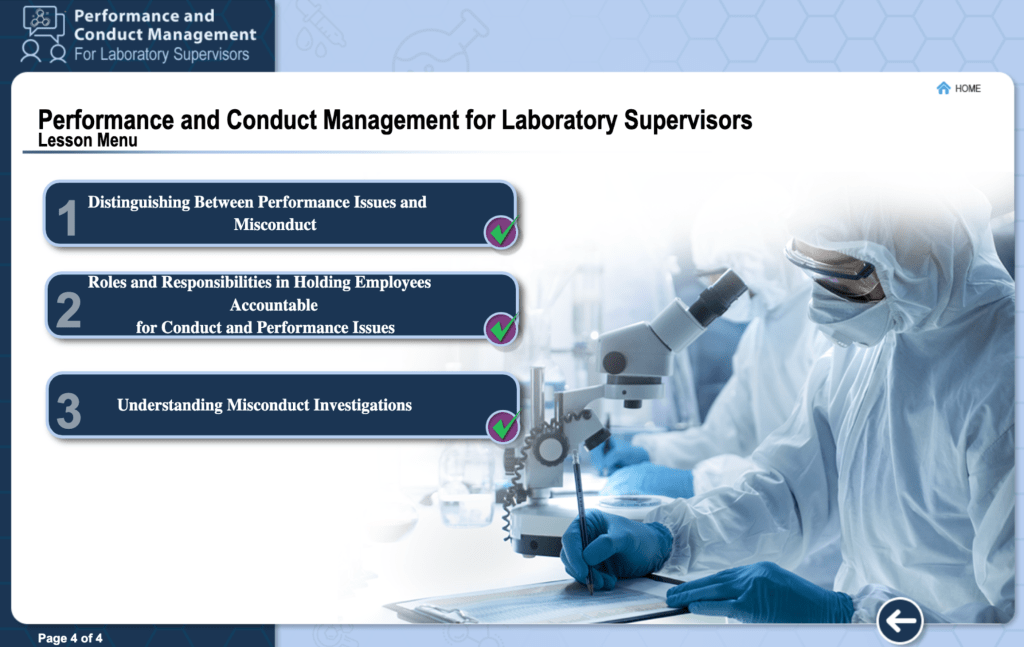
The course was initially planned as eight modules, but through collaboration with CDC SMEs, the content was refined and consolidated into three focused modules. This streamlined structure prioritized the most relevant content while still addressing all established learning objectives.
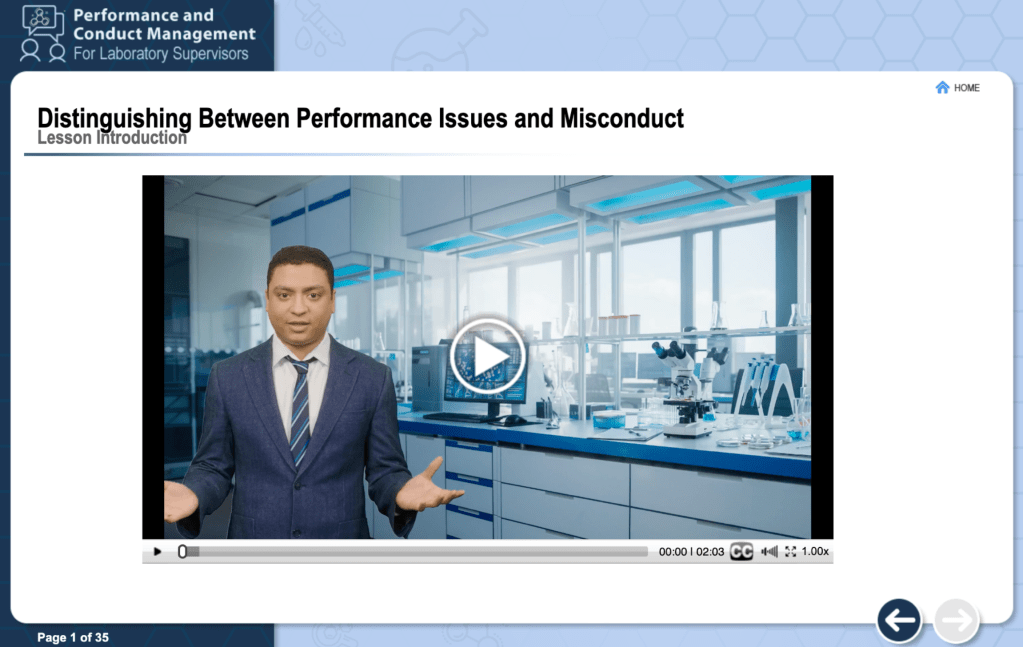
An avatar narrator appears in videos throughout the course to provide context and add nuance to key concepts. The narrator also offers additional insights and helps create smooth transitions between topics and sections of the learning.
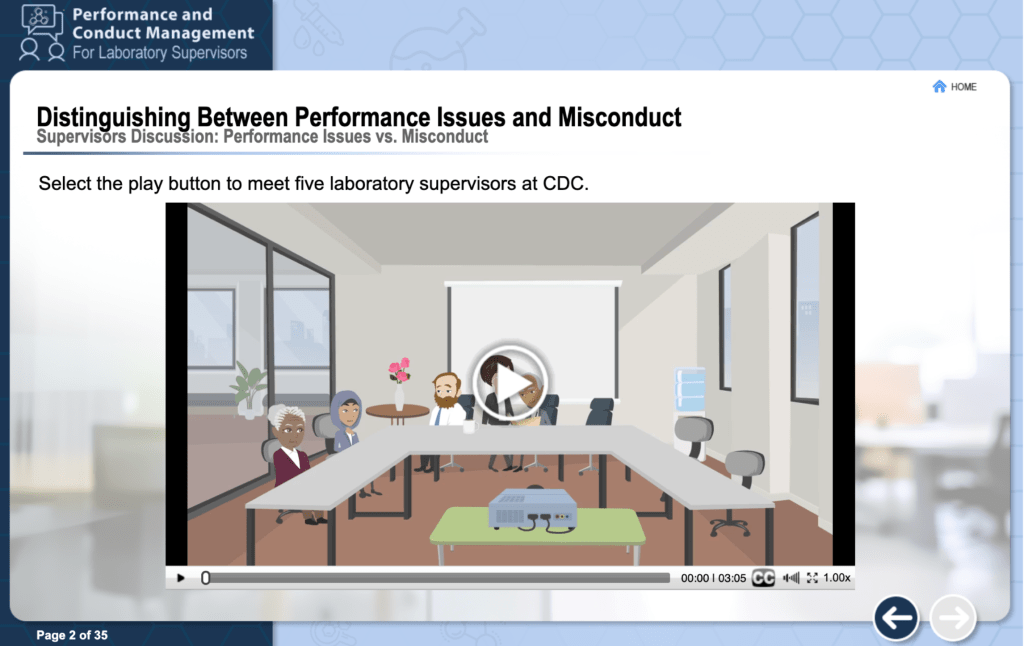
The scenario-driven course is framed by recurring conference-room discussions among five laboratory supervisors addressing employee performance and conduct issues. Vyond animations bring these scenarios to life as the supervisors share guidance, discuss relevant policies, and consider important factors in handling workplace situations.
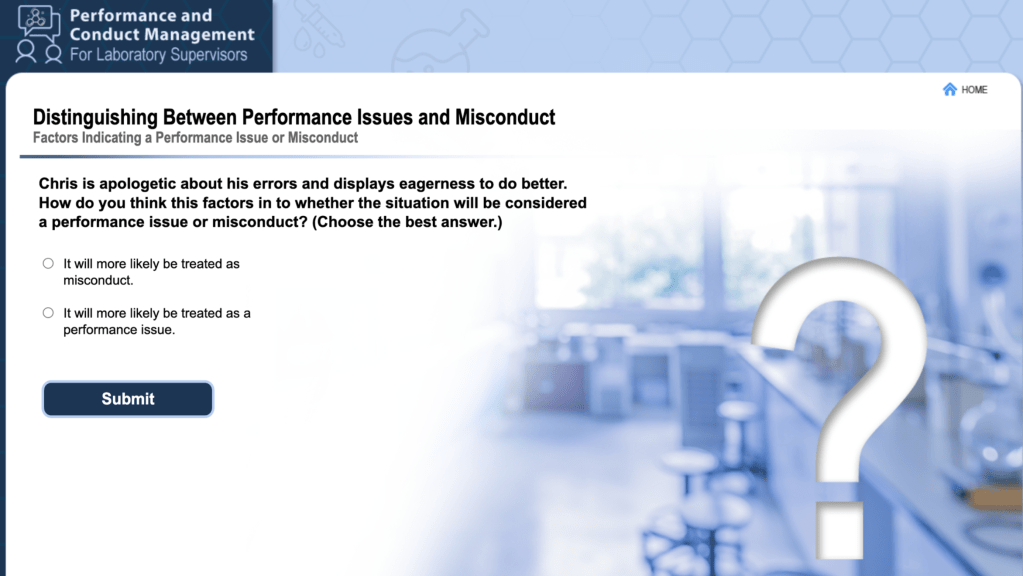
After reviewing a scenario, learners are often asked to consider whether the situation is primarily a performance or conduct issue. Because these situations can involve ambiguity and gray areas, many questions are intentionally framed as “What do you think?” rather than implying that every scenario has a single, definitive classification.
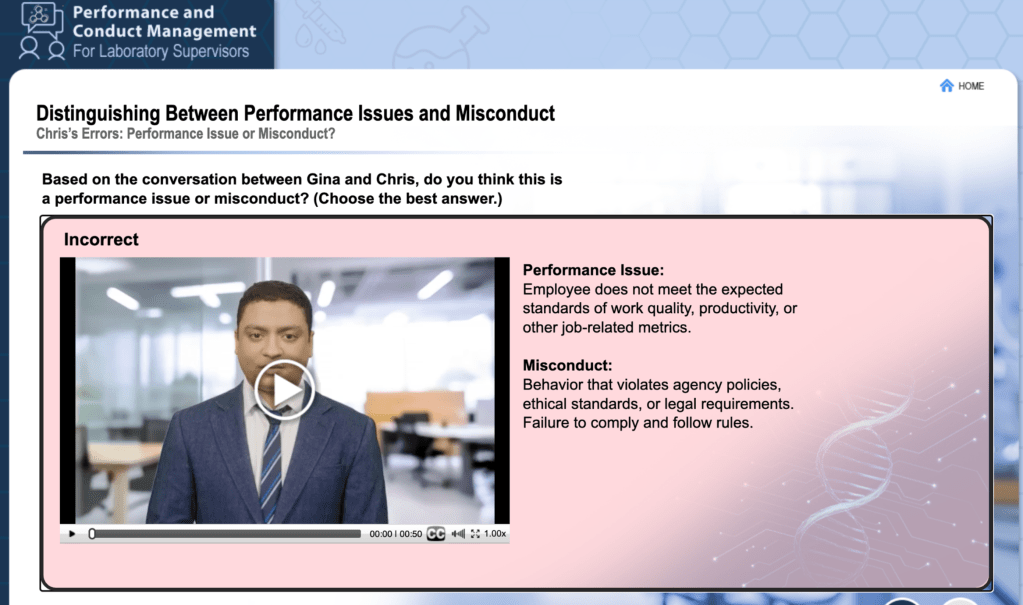
Scenario questions provide feedback for both correct and incorrect responses, with some instructional content intentionally delivered through the feedback to keep the course concise. Feedback appears in a prominent pop-up covering much of the screen, encouraging learners to pause and engage with the explanation rather than quickly dismissing it.
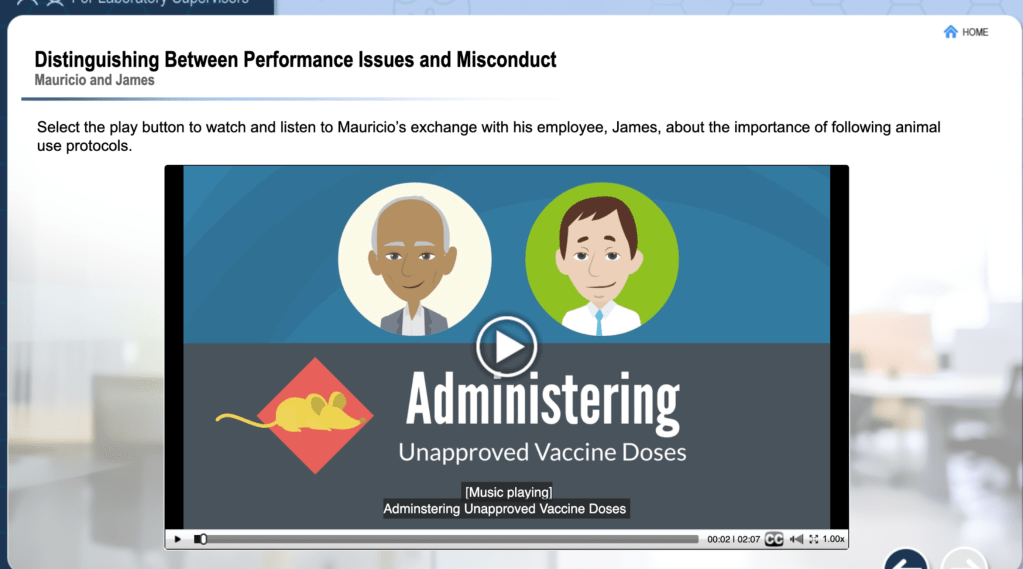
Because the course moves nonlinearly among several recurring scenarios, each animated scenario begins with a consistent title screen featuring the characters involved. This visual cue helps learners quickly identify which situation they are entering or revisiting and maintain context as they move through the course.
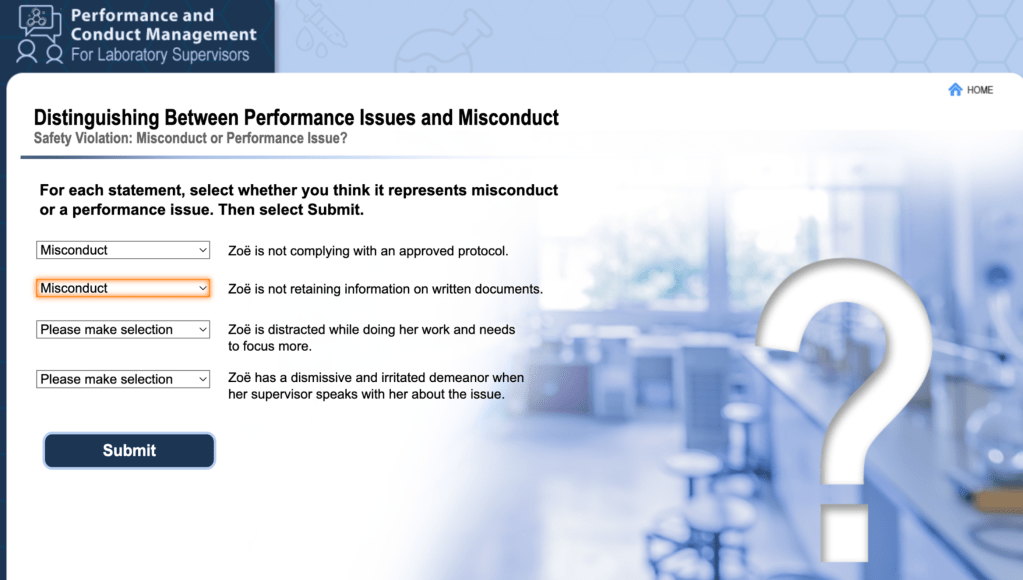
Learners practice distinguishing between performance and conduct issues through a variety of interactions rather than relying solely on multiple-choice questions. In this activity, learners review four statements about an employee and use drop-down menus to classify each behavior or circumstance as a performance or conduct issue.
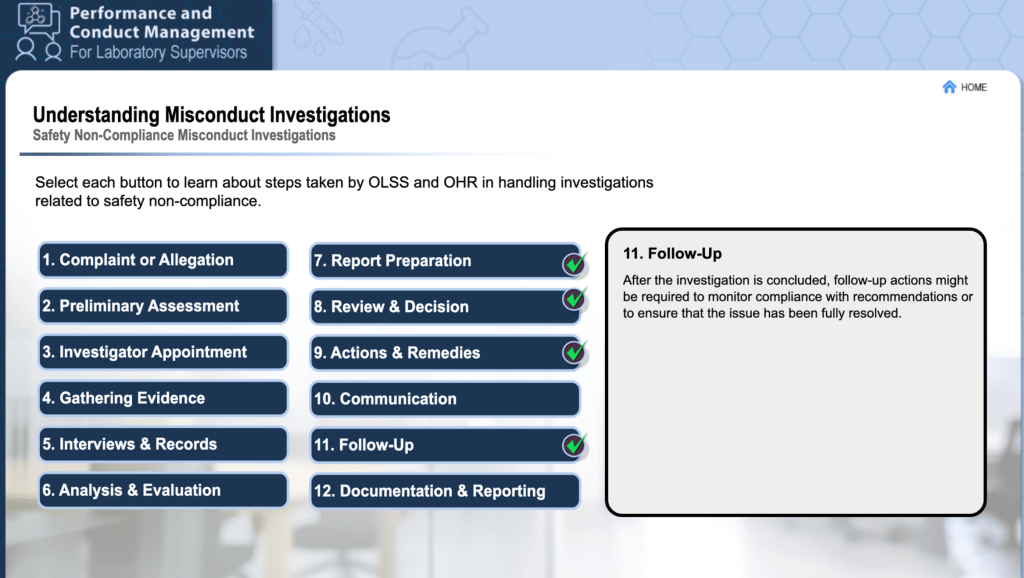
Dense text content is broken into manageable sections using learner-selected buttons and pop-up text, allowing learners to explore information in smaller chunks. After each section is viewed, a green checkmark appears beside the corresponding button to provide a clear visual indicator of progress.
 Jane Nguyen