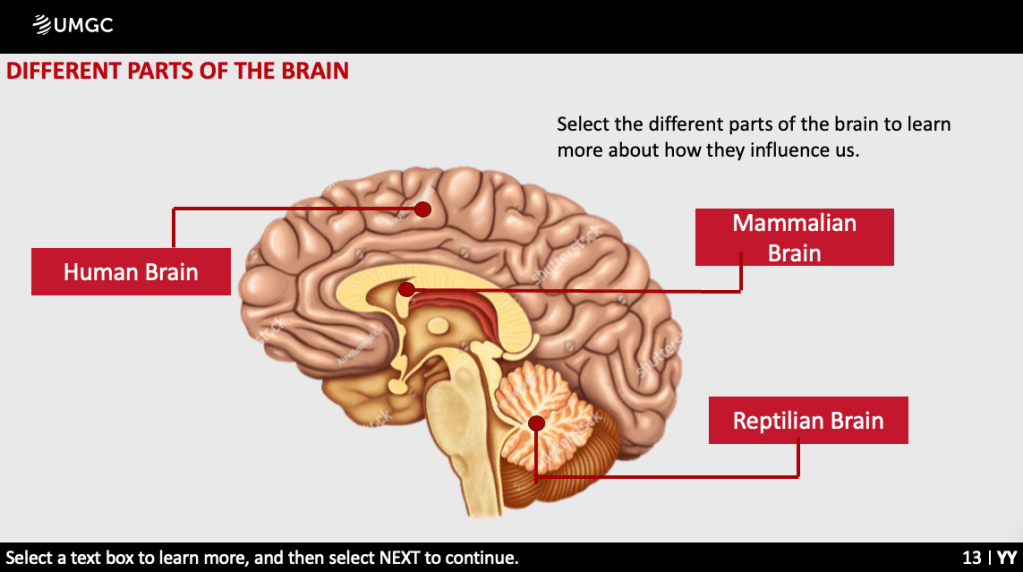
Learners explore how the brain processes stimuli and how these processes influence emotional and behavioral responses. Selecting the Human Brain, Mammalian Brain, or Reptilian Brain reveals additional information about how different areas of the brain can shape our reactions.
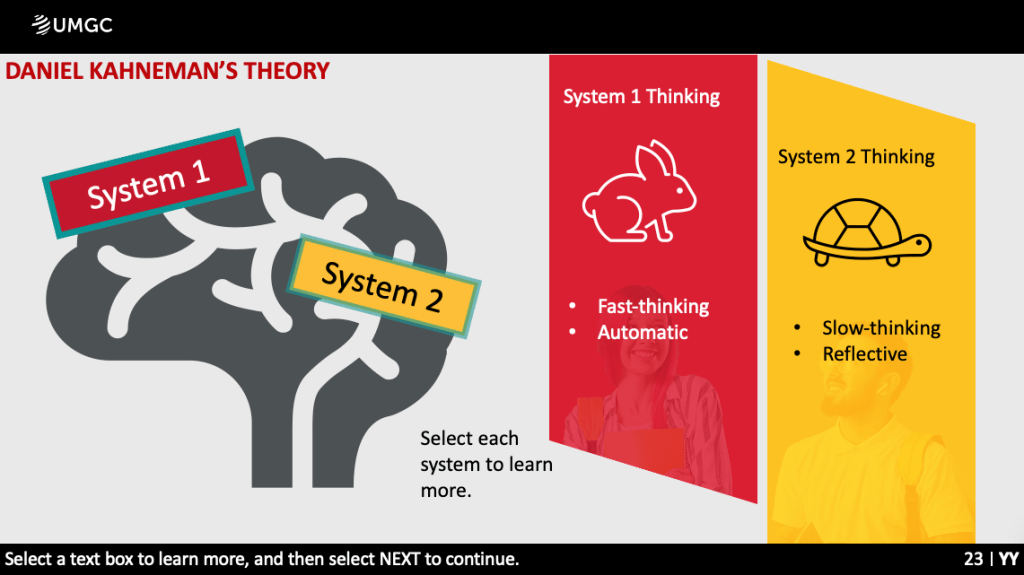
Learners are introduced through audio narration to Daniel Kahneman’s theory of two modes of thinking: System 1 and System 2. Selecting either option reveals a more detailed explanation of its characteristics and how it influences thought and decision-making.
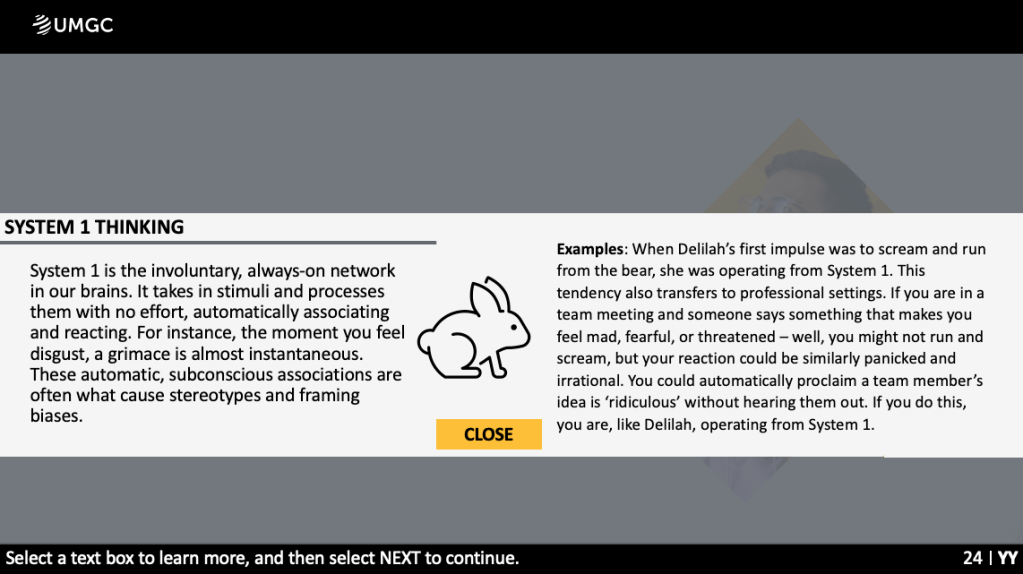
After selecting System 1, learners see a pop-up with a more detailed explanation of System 1 thinking. I intentionally left the pop-up unnarrated to vary the learning experience between reading and listening; learners can then close the pop-up and return to the main interaction.
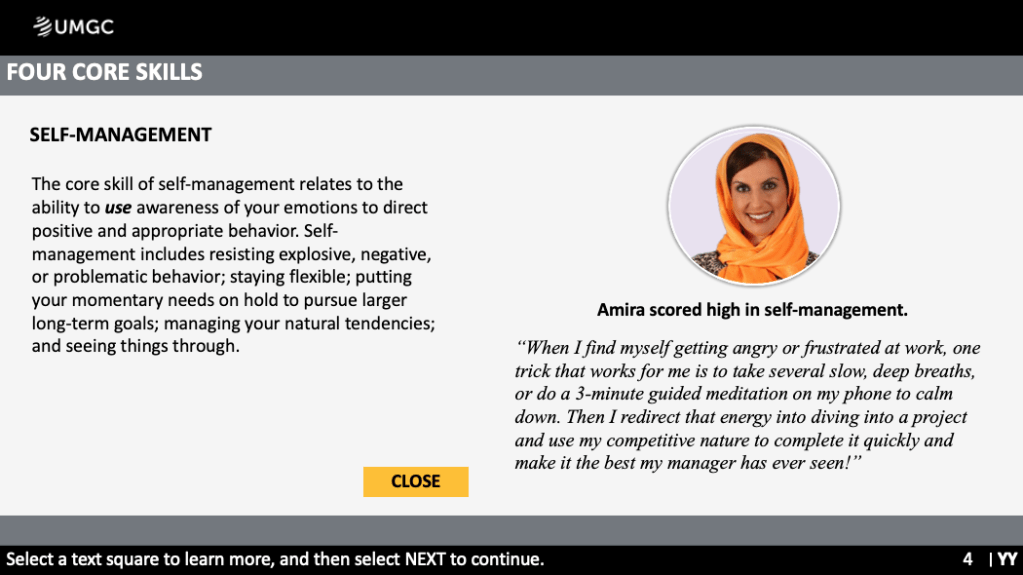
Learners explore the four core skills of emotional intelligence, including self-management. A work-related quote from Amira, a hypothetical UMGC employee, grounds the concept in a relatable workplace context, while her image helps personalize the example for learners.
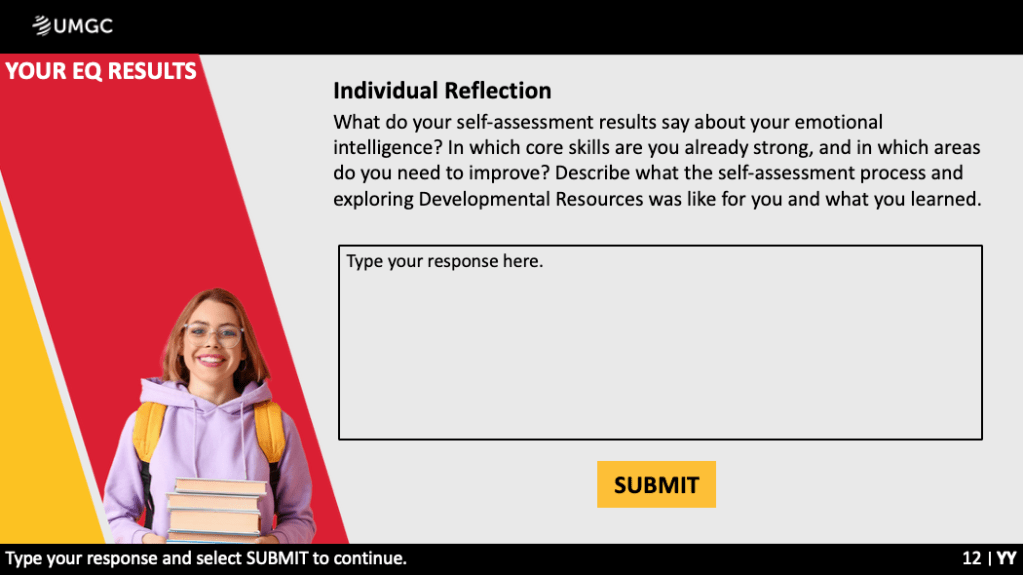
Learners are prompted to reflect periodically throughout the course and connect the content to their own experiences. Here, they consider what their emotional intelligence assessment results reveal about their strengths and areas for development, as well as their experience completing the assessment and exploring related resources.
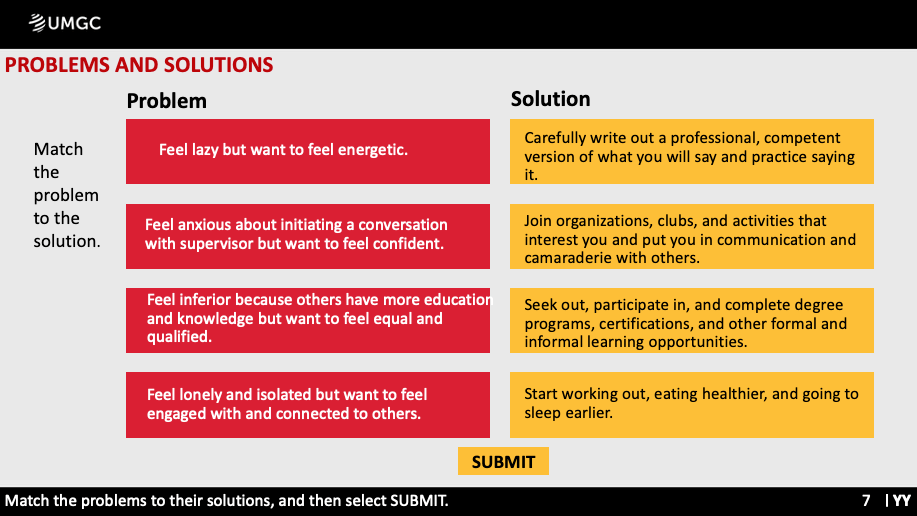
After learning behavioral strategies for creating a desired emotional state, learners complete a matching activity to reinforce the concepts. The activity emphasizes how intentionally behaving in ways consistent with a desired feeling can help cultivate that emotional response.
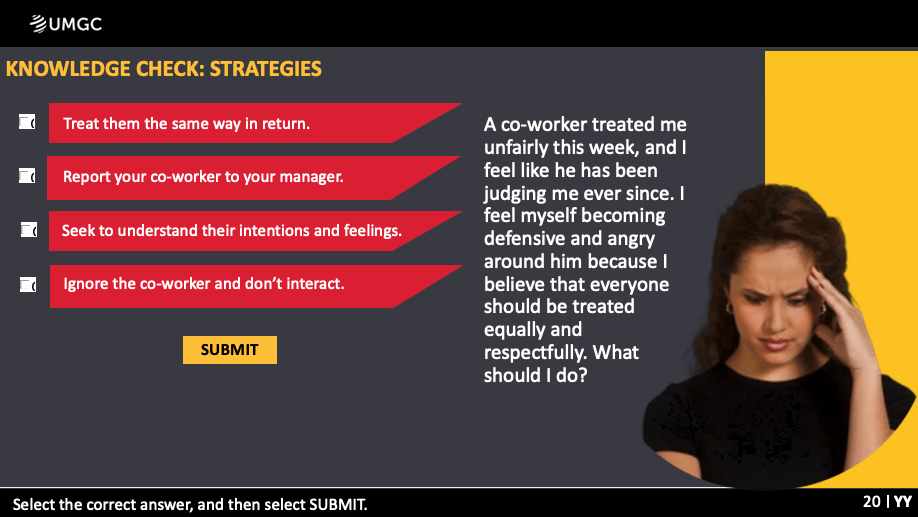
Learners complete a scenario-based knowledge check that places key course concepts in a brief workplace context. Immediate feedback reinforces the correct response and helps learners connect emotional intelligence concepts to practical situations.
 Jane Nguyen